
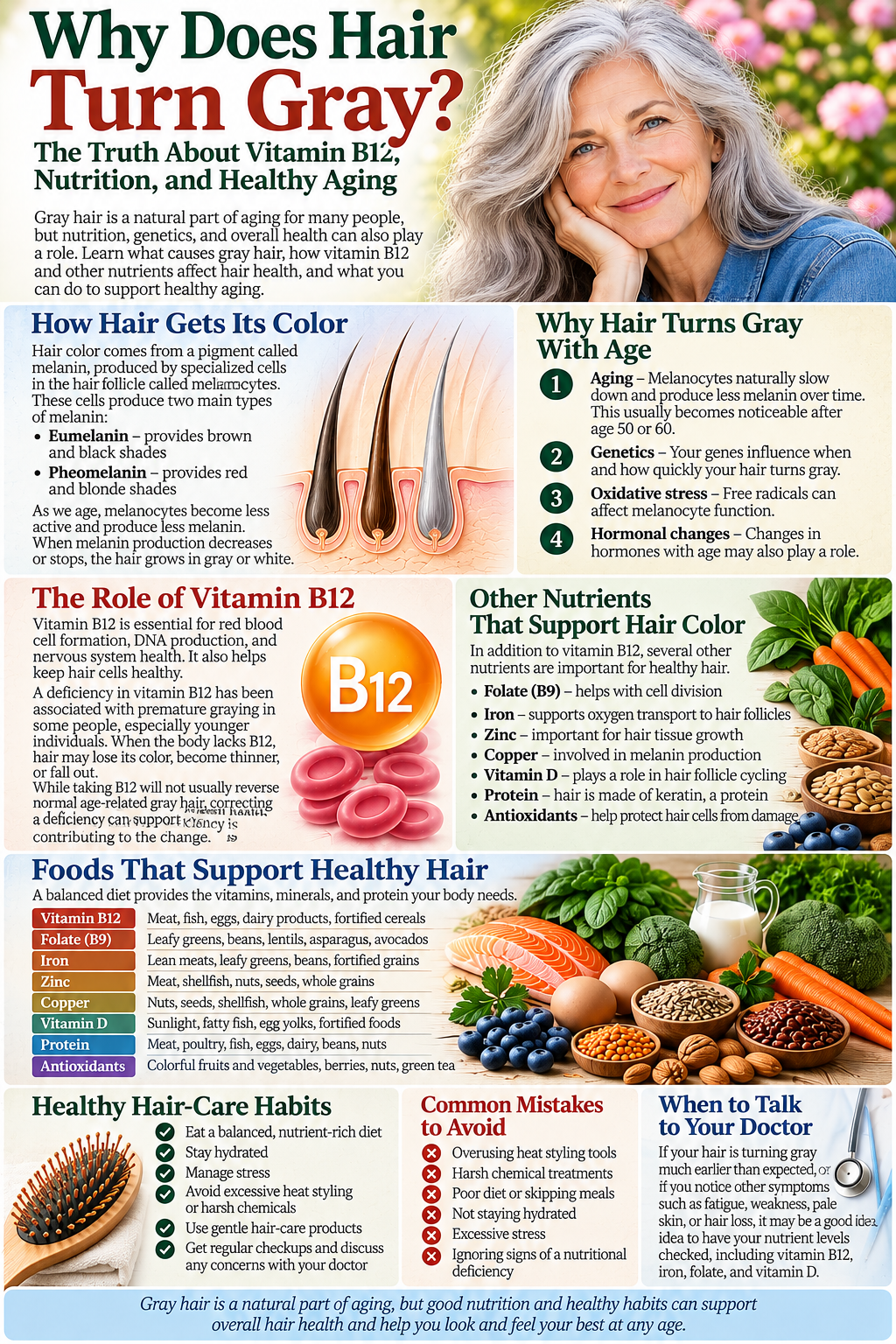
Can vitamins prevent gray hair? Discover what causes hair to lose its color, which nutritional deficiencies may contribute, and what you can do to maintain healthy hair as you age.
Finding your first gray hair can be surprising. For some people, it happens in their thirties. Others maintain their natural hair color well into their sixties or beyond.
As gray hairs multiply, it’s natural to wonder whether something is missing from your diet. Could a vitamin deficiency be responsible? Can eating certain foods restore your natural hair color?
The answers are more interesting than many advertisements would have you believe.
Although aging and genetics are the main reasons our hair turns gray, nutrition also plays an important role in maintaining healthy hair. Certain vitamin and mineral deficiencies may contribute to premature graying, and correcting those deficiencies can improve overall health.
Let’s explore what science tells us.
1. Why Does Hair Turn Gray as We Age?
Hair gets its natural color from a pigment called melanin.
Specialized cells called melanocytes produce melanin within the hair follicle. As each strand of hair grows, pigment is incorporated into it, giving hair its natural color.
There are two primary types of melanin:
- Eumelanin: Responsible for brown and black shades.
- Pheomelanin: Contributes to red and yellow shades.
The combination and amount of these pigments determine whether your hair is black, brown, blonde, or red.
As we age, the cells responsible for producing hair pigment become less effective. The supply and function of melanocyte stem cells also change.
Eventually, some follicles produce hair with little or no pigment.
Hair with reduced pigment appears gray, while hair without pigment appears white.
Gray hair is therefore not usually a sign of illness. It is a normal part of the aging process.
2. Why Do Some People Turn Gray Earlier Than Others?
Genetics is the strongest predictor of when your hair will begin turning gray.
If your parents or grandparents developed gray hair at an early age, you may experience a similar pattern.
Other factors can influence the timing of graying, including:
- Smoking
- Certain medical conditions
- Nutritional deficiencies
- Oxidative stress
- Some autoimmune conditions
Stress may also contribute to pigment changes in certain circumstances, although the relationship is complex.
By age 50 or 60, some people have mostly gray hair, while others have relatively little.
Neither situation necessarily indicates anything about a person’s overall health.
3. What Does Vitamin B12 Have to Do With Gray Hair?
Vitamin B12 is essential for several important functions in the body.
It helps maintain healthy nerve cells, supports red blood cell formation, and is necessary for normal DNA production.
Because hair follicles contain rapidly dividing cells, adequate nutrition is important for their normal function.
Some studies have found an association between premature hair graying and low vitamin B12 levels.
However, an association does not mean that taking vitamin B12 will reverse ordinary age-related gray hair.
If someone has a genuine B12 deficiency, correcting it is important for their health. In some deficiency-related cases, hair pigmentation may improve, but this is not guaranteed.
Signs of Vitamin B12 Deficiency
Symptoms can include:
- Unusual tiredness or weakness
- Pale skin
- Numbness or tingling in the hands or feet
- Difficulty with balance
- Memory or concentration problems
- A sore or inflamed tongue
These symptoms can have many causes, so proper medical evaluation is important.
Untreated B12 deficiency can cause neurological damage, sometimes even without obvious anemia.
Why Older Adults May Need to Pay Special Attention
As we grow older, our ability to absorb vitamin B12 from food may decrease.
Certain medications, including metformin and long-term acid-suppressing medications, can also contribute to low B12 levels.
People following vegan diets and those with certain digestive or autoimmune conditions may be at increased risk.
A healthcare professional can determine whether testing or supplementation is appropriate.
4. Other Nutrients That Support Healthy Hair
Vitamin B12 is not the only nutrient involved in healthy hair growth.
Several vitamins and minerals contribute to normal cell function, protein production, and hair follicle health.
Iron
Iron helps the blood transport oxygen throughout the body.
Iron deficiency is associated with certain types of hair loss, although its relationship with gray hair is less clear.
Good food sources include lean meat, beans, lentils, spinach, and iron-fortified cereals.
Copper
Copper is involved in several enzyme systems, including one associated with melanin production.
Low copper levels have been investigated as a possible factor in premature graying, but research is limited.
Copper-rich foods include nuts, seeds, legumes, shellfish, and whole grains.
Excess copper can be harmful, so supplements should not be taken without a medical reason.
Folate
Folate, also called vitamin B9, supports DNA production and normal cell division.
It is found in leafy greens, beans, lentils, asparagus, and fortified grain products.
Vitamin D
Vitamin D supports many functions, including bone and immune health.
Researchers have studied its relationship with hair disorders, but there is insufficient evidence that vitamin D supplements prevent or reverse ordinary graying.
Protein
Hair is made primarily of a protein called keratin.
Insufficient dietary protein can contribute to weak hair and abnormal hair growth.
Eggs, fish, poultry, dairy products, beans, lentils, and soy foods can help meet protein needs.
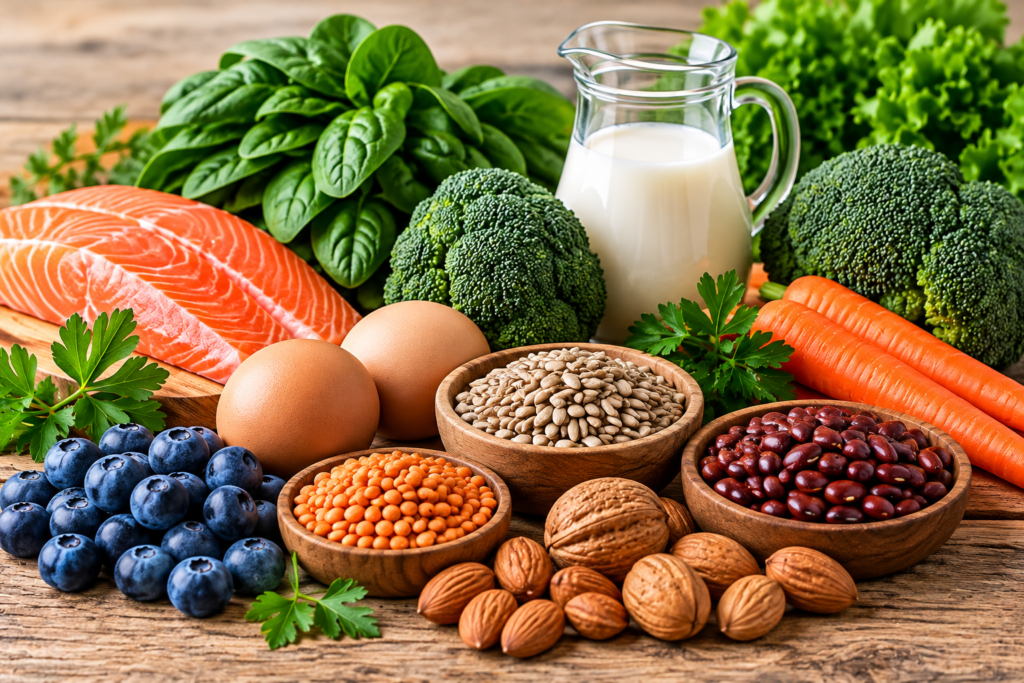
5. Foods That Support Healthy Hair as You Age
Instead of searching for a miracle supplement, concentrate on a varied diet that provides essential nutrients.
Here are some useful foods to include regularly.
| Food | Important nutrients |
|---|---|
| Eggs | Protein, B12, biotin |
| Salmon and sardines | Protein, B12, vitamin D, omega-3 fats |
| Lean beef | Protein, iron, B12, zinc |
| Milk and yogurt | Protein, B12, calcium |
| Lentils and beans | Folate, iron, protein |
| Spinach and leafy greens | Folate, vitamin K, carotenoids |
| Pumpkin seeds | Zinc, magnesium, iron |
| Nuts | Copper, vitamin E, healthy fats |
| Whole grains | B vitamins, minerals, fiber |
| Citrus fruits and berries | Vitamin C and antioxidant compounds |
These foods contribute to general health and normal hair growth, but none has been proven to restore pigment to naturally gray hair.
6. Can Gray Hair Turn Back to Its Original Color?
This is one of the most common questions people ask.
For ordinary age-related graying, the answer is generally no.
Once a hair follicle loses its ability to produce pigment, there is currently no proven vitamin, food, or supplement that reliably restores its original color.
Researchers have observed occasional repigmentation in certain circumstances, including some stress-related changes and medical conditions.
But these findings should not be confused with a dependable treatment for age-related graying.
Products claiming to reverse gray hair through large doses of vitamins, minerals, or herbal ingredients should be approached cautiously.
More is not always better, and excessive supplementation can cause harm.
7. Hair-Care Habits That Become More Important After 50
Gray hair often has a different texture from pigmented hair.
It may feel coarser, drier, or more difficult to manage.
These changes are not necessarily caused by the absence of pigment alone. Aging also affects the scalp, hair follicles, and hair shaft.
A few simple habits can help.
Use a gentle shampoo. Avoid harsh washing practices that leave the scalp irritated or hair excessively dry.
Condition regularly. Moisturizing conditioners can improve softness and manageability.
Limit excessive heat. Frequent high-temperature styling can damage the hair shaft.
Protect hair from the sun. Hats and appropriate hair products can help reduce ultraviolet damage.
Avoid unnecessary chemical treatments. Frequent bleaching, straightening, and harsh processing can weaken hair.
Eat enough protein and calories. Restrictive diets can contribute to hair shedding and poor hair quality.
8. When Should You Talk to Your Doctor?
Gradual graying over many years is usually normal.
However, certain changes deserve attention, especially when they occur alongside other symptoms.
Consider discussing your hair and nutritional health with a healthcare professional if you notice:
- Unusually early or rapidly progressing graying
- Sudden or significant hair loss
- Persistent fatigue or weakness
- Tingling, numbness, or balance difficulties
- Major dietary changes or unexplained weight loss
- Symptoms suggesting a thyroid or nutritional problem
Your healthcare professional may recommend blood tests based on your symptoms, medical history, medications, and dietary habits.
Not everyone with gray hair needs vitamin testing.
9. Should You Take a Vitamin B12 Supplement?
Vitamin B12 supplements can be valuable for people who have a deficiency or are at increased risk of developing one.
But taking extra B12 when your levels are already adequate has not been shown to prevent normal aging-related gray hair.
B12 is found to be more bio available when taken sublingually, dissolved under the tongue.
For adults over 50, obtaining B12 from fortified foods or supplements may be useful because absorption of naturally occurring food-bound B12 can decline with age.
The appropriate dose depends on individual circumstances.
Avoid assuming that a supplement is necessary simply because your hair is turning gray.
10. Healthy Aging Is About More Than Hair Color
Gray hair is one of the most visible signs of aging, but it is not a reliable measure of nutritional health.
Someone with completely gray hair may be exceptionally healthy, while someone with dark hair may have nutritional deficiencies.
The more important goal is to support your body’s needs through good nutrition and sensible daily habits.
Eating a balanced diet, staying physically active, sleeping adequately, avoiding tobacco, and addressing medical concerns can support overall well-being.
These habits may not restore your original hair color, but their benefits extend far beyond appearance.
Final Thoughts: Don’t Chase a Miracle Cure for Gray Hair
There is nothing wrong with wanting to preserve your natural hair color.
But before spending money on expensive supplements promising to reverse gray hair, remember that aging and genetics are responsible for most graying.
Vitamin B12 and other nutrients are essential for health, and correcting genuine deficiencies is worthwhile.
However, no vitamin has been proven to reliably turn naturally gray hair back to its original color.
The best investment you can make is in your overall health. EAT LIVER!
Healthy aging isn’t about preventing every gray hair. It’s about giving your body the nutrition and care it needs to function well at every age.
Disclaimer: This article is for educational purposes and is not a substitute for professional medical advice. Consult a qualified healthcare professional about suspected nutritional deficiencies or unexpected changes in your health.


