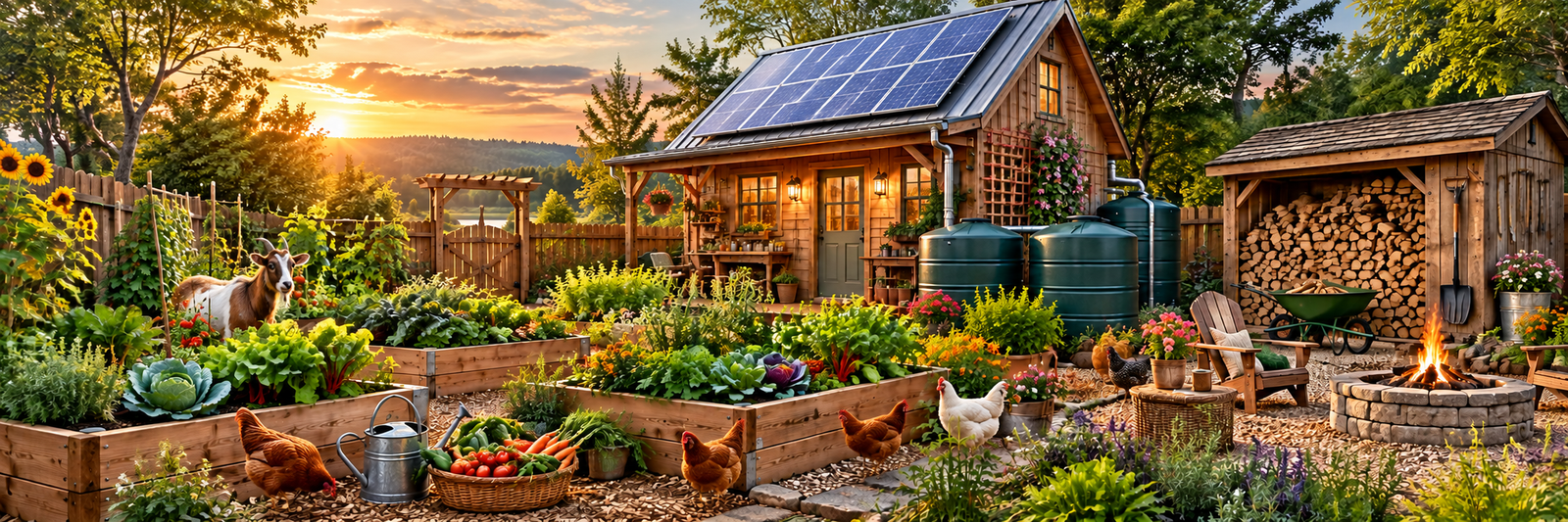
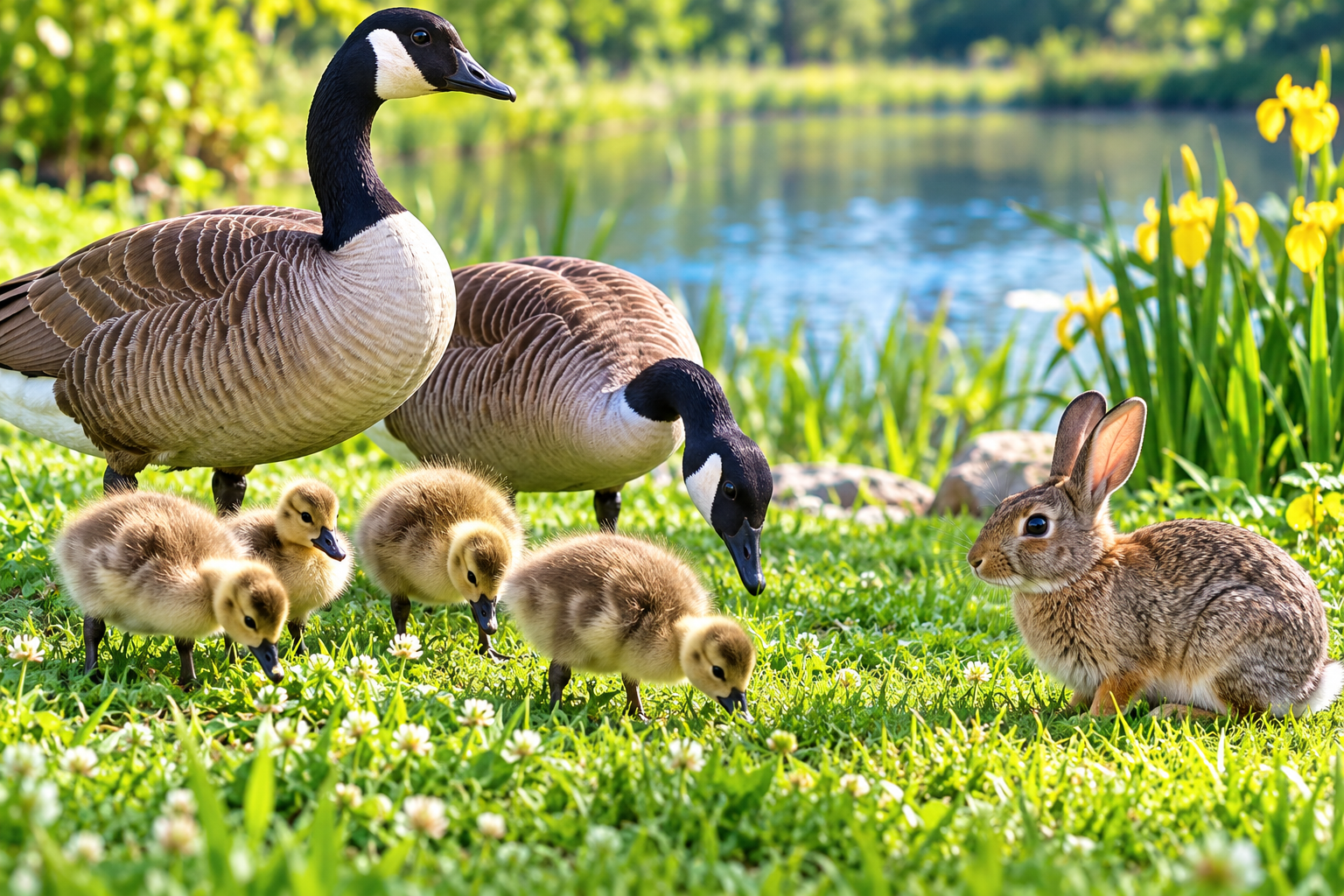
Two traditional sources of homegrown meat offer very different advantages. Discover which is best for your space, budget, and self-sufficiency goals.
When I was young…
Rabbits are so cute and soft. We had a checkered rabbit (white with black spots). One day she was gone. The next day a neighbor brought her home. A month later we had 6 babies. So cute!
When I lived in New Hope Pa as a child, the geese from the Delaware River would come up and hang out on the street, much to the dismay of the tourists who would try to walk by. New Hope is about midway between New York City and Philadelphia, so there were tourists every weekend. I would escort them past the geese, who knew that I lived there and they would not attack me.
When people think about raising animals for food, chickens are usually the first choice. But two other animals deserve consideration: rabbits and geese.
Both have been raised for food for generations, and both can play a valuable role in a backyard homestead.
Rabbits are quiet, reproduce quickly, and require relatively little space. Geese are excellent grazers, produce substantial amounts of meat, and can help maintain grassy areas while alerting their owners to approaching visitors.
But which is the better choice if your goal is to produce more of your family’s food?
The answer depends on how much land you have, what feed is available, your climate, and how much time you want to spend caring for livestock.
1. Rabbits: Small Animals With Big Food-Producing Potential
Rabbits are among the most practical meat animals for people with limited space.
Unlike larger livestock, rabbits can be raised in a relatively compact enclosure or sheltered housing system. They are generally quiet, making them particularly attractive to backyard homesteaders.
Best Rabbit Breeds for Meat
Two of the most popular breeds are:
- New Zealand: Known for fast growth, good meat production, and productive breeding females.
- Californian: A compact, muscular breed frequently used for commercial meat production.
Other possibilities include Champagne d’Argent, American Chinchilla, and crosses developed specifically for meat production.
How Much Meat Can Rabbits Produce?
Rabbits reproduce much more rapidly than most backyard livestock.
A female rabbit, called a doe, has a gestation period of approximately 31 days. A healthy doe may produce litters containing six to ten kits, although litter sizes vary.
Meat rabbits are commonly ready for processing at around 8–12 weeks, depending on their breed, feeding program, and desired size.
A small breeding group consisting of one buck and two does can potentially produce several dozen meat rabbits annually.
Actual production depends on breeding schedules, litter survival, weather, animal health, and how much recovery time is allowed between litters.
Advantages of Raising Rabbits
Small space requirements: Rabbits are suitable for smaller properties when local regulations permit them.
Quiet animals: Unlike geese or roosters, rabbits generally produce very little noise.
Rapid reproduction: Rabbits can provide a relatively steady supply of meat throughout the year.
Efficient feed use: Meat breeds convert feed into animal protein efficiently.
Useful manure: Rabbit manure is valuable for composting and improving garden soil.
Lean meat: Rabbit meat is high in protein and generally lower in fat than many conventional meats.
Disadvantages of Raising Rabbits
Rabbits require more attention than their small size might suggest.
They are sensitive to extreme heat, and temperatures that seem comfortable to people can become dangerous to rabbits, especially in humid climates.
They also need balanced feed, constant access to clean water, protection from predators, and regular cleaning.
Although rabbits can eat hay and certain fresh plants, a diet consisting entirely of lawn grass and kitchen scraps is not suitable for productive meat rabbits.
Another consideration is that rabbit meat is exceptionally lean. Families relying heavily on rabbit as a protein source need adequate dietary fat and calories from other foods.
2. Geese: Grazing Birds That Produce Meat and More
Geese are a traditional farm animal that many modern homesteaders overlook.
While chickens spend much of their time scratching for insects and seeds, geese are enthusiastic grazers.
Given suitable pasture, they can obtain a substantial portion of their food from growing grass and other vegetation.
This makes geese especially interesting for people who have open grassy areas.
Best Goose Breeds for Meat
Embden: A large white goose widely recognized for meat production.
Toulouse: A heavy-bodied breed traditionally raised for meat, although growth and body type vary among strains.
Pilgrim: A medium-sized heritage breed that can provide meat and seasonal eggs.
African: A substantial goose breed sometimes raised for meat and as an alert farm bird.
How Much Meat Can Geese Produce?
Geese are considerably larger than rabbits.
Depending on breed, age, and feeding, a finished goose may provide a substantial carcass suitable for a family meal and leftovers.
Some fast-growing meat geese can reach processing size in approximately 9–12 weeks, while heritage or pasture-raised birds may take longer.
However, geese do not reproduce nearly as rapidly as rabbits.
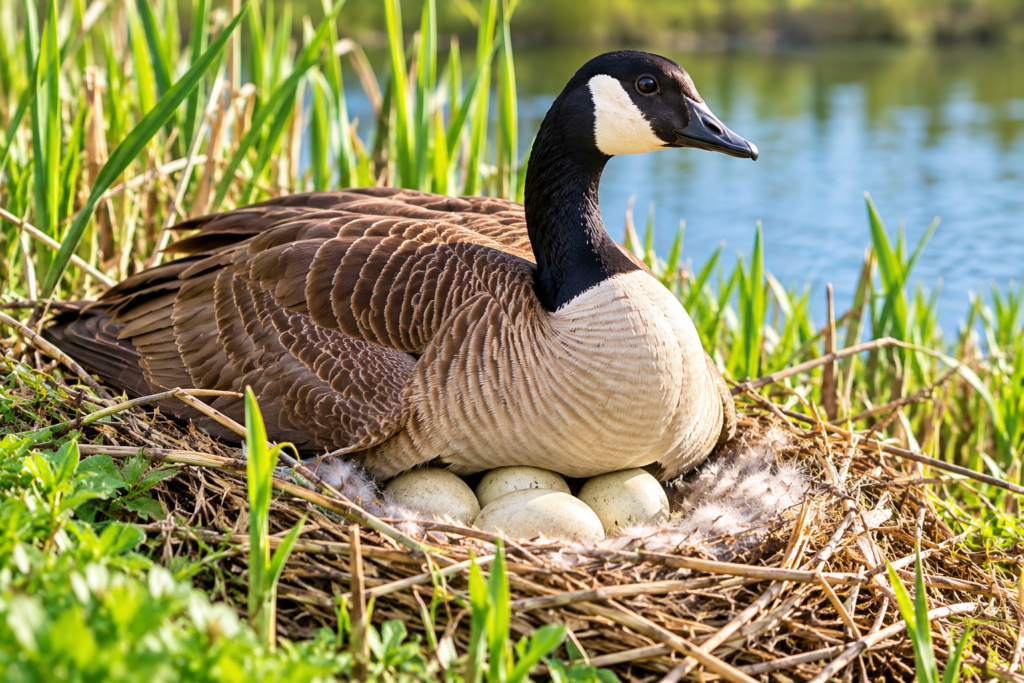
Many breeds lay eggs seasonally, primarily during spring, and the number of goslings produced annually can be limited.
For a family hoping to produce meat continuously throughout the year, this seasonal reproduction is an important disadvantage.
Advantages of Raising Geese
Excellent grazing ability: Geese can obtain considerable nutrition from good pasture.
Larger carcasses: One goose provides more meat per animal than one young meat rabbit.
Rich, flavorful meat: Goose meat has a distinctive flavor and contains more fat than rabbit meat.
Useful feathers and down: These can be collected and processed for certain household uses.
Natural alarm system: Geese frequently make noise when unfamiliar animals or people approach.
Seasonal eggs: Goose eggs are large and can be used for cooking and baking.
Disadvantages of Raising Geese
Geese need more outdoor space than rabbits, particularly if grazing is an important part of your feeding plan.
They can also be noisy, territorial, and messy.
Their droppings accumulate quickly around feeding areas, water containers, and favorite resting places.
Although geese do not require a pond, they need reliable drinking water deep enough to immerse their heads and clean their nostrils and eyes.
They also need secure nighttime housing to protect them from predators.
Geese are generally seasonal breeders, making it more difficult to maintain a year-round supply of young birds without careful planning and freezer storage.
3. Rabbits vs. Geese: Side-by-Side Comparison
| Feature | Rabbits | Geese |
|---|---|---|
| Space required | Relatively small | More outdoor grazing space |
| Noise | Very quiet | Often loud |
| Reproduction | Fast, potentially year-round | Primarily seasonal |
| Time to meat | Often 8–12 weeks | Often 9–20 weeks, depending on breed and system |
| Meat type | Very lean, mild flavor | Richer, fattier, stronger flavor |
| Feed | Balanced pellets, hay, appropriate forage | Pasture plus supplemental feed |
| Water | Clean drinking water | Drinking and head-dipping water |
| Garden benefits | Valuable manure | Grazing and vegetation management |
| Climate concerns | Particularly sensitive to heat | Require shade and fresh water in hot weather |
| Best suited for | Limited-space meat production | Properties with good pasture |
4. Which Animal Is Cheaper to Raise?
This is where the comparison becomes interesting.
Rabbits and geese have very different feeding requirements, so the cheapest choice depends on your property.
Feeding Rabbits
Rabbits usually depend on purchased, nutritionally balanced feed supplemented with suitable hay.
That means a rabbit operation generally requires an ongoing feed budget, even if the property has plenty of grass.
However, rabbits require relatively little housing space, and a well-managed breeding group can produce multiple litters each year.
Feeding Geese
Geese may be less dependent on purchased feed when they have access to high-quality pasture during the growing season.
Young goslings still require appropriate starter feed, and adult geese need supplemental nutrition when grazing is inadequate.
If your property already has productive grassland, geese may be economical during much of the year.
But if you must purchase nearly all their feed, the cost advantage can disappear.
Other Expenses to Consider
For either animal, include the cost of breeding stock, housing, fencing, feeders, veterinary care, predator protection, and processing equipment or services.
The most useful calculation is not simply the cost of keeping one animal. It is the total cost per pound of usable meat.
Keep records of feed purchases, animal weights, processing costs, and finished meat yields before deciding which is more economical.
5. Which Is Better for a Small Backyard?
For a small suburban or rural backyard, rabbits often have the advantage.
They need less space, create less noise, and are easier to contain in a properly designed shelter.
A small breeding group may provide a meaningful amount of meat without requiring a pasture.
Geese are usually a better match for a larger property with room to graze.
They also need consideration for neighbors, particularly where noise is concerned.
Before purchasing either animal, check local zoning ordinances, neighborhood restrictions, and any applicable animal-keeping regulations.
6. Which Animal Is Better for Emergency Food Preparedness?
For a family interested in self-reliance, both animals have benefits.
Why Rabbits Are Useful
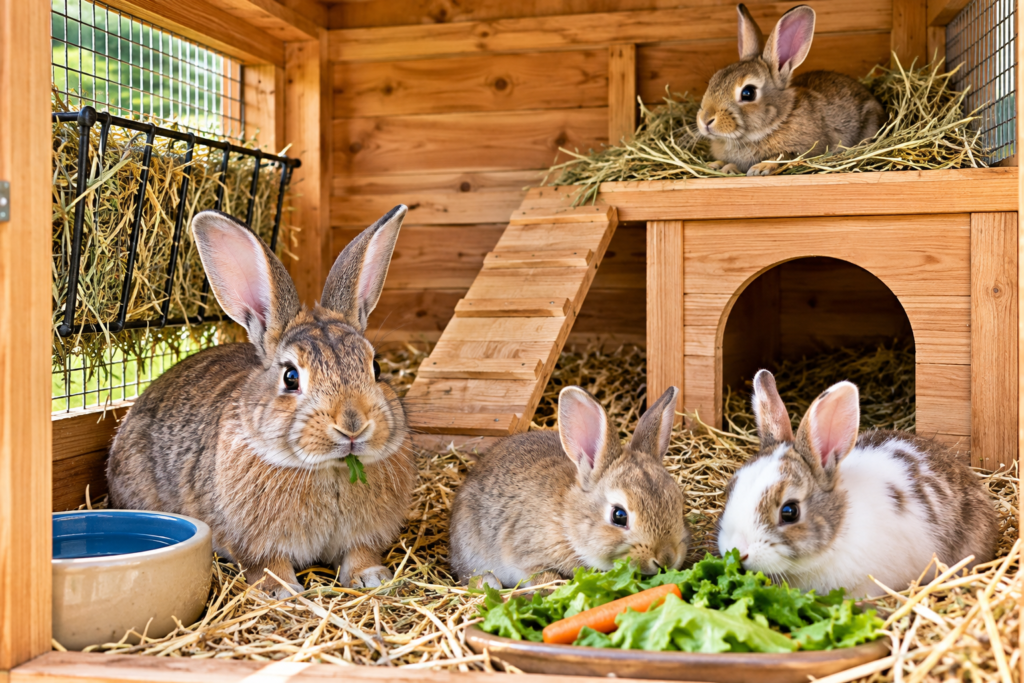
Rabbits reproduce quickly, can be housed in a small area, and offer the potential for regular meat production.
However, their reliance on balanced feed means that long-term feed availability must be considered.
A breeding colony is not truly self-sufficient if its feed supply becomes unavailable.
Why Geese Are Useful
Geese can take advantage of pasture that people cannot eat directly.
During a productive grazing season, they may turn grass into meat while requiring less purchased feed than animals kept entirely in confinement.
However, their seasonal breeding and greater space requirements can limit production.
The Value of Raising Both
For some homesteads, keeping rabbits and geese may be more practical than choosing only one.
Rabbits provide a more frequent source of lean meat, while geese offer larger, richer birds and the ability to use grassy pasture.
The combination also diversifies food production rather than depending on a single species.
7. Animal Care and Predator Protection
Both rabbits and geese are vulnerable to predators.
Raccoons, foxes, coyotes, dogs, and other animals can cause devastating losses.
Rabbit housing should provide shade, ventilation, dry resting areas, protection from digging predators, and surfaces that do not injure the animals’ feet.
Geese need a secure shelter at night, suitable fencing, clean water, and protection from extreme weather.
Both species should have enough room to move naturally and express normal behaviors.
Regular cleaning and prompt attention to signs of illness are essential.
A special consideration for hot climates: Rabbits can suffer heat stress quickly. In places such as Florida, shaded housing, excellent airflow, and a reliable heat-management plan are particularly important.
8. Processing and Storing Homegrown Meat
Raising animals for food also means planning how the meat will be processed and stored.
Before starting, learn about humane handling, appropriate processing methods, food sanitation, and local regulations.
A licensed processor may be the simplest option for beginners.
Fresh meat must be chilled promptly and stored at safe temperatures.
Freezing properly packaged meat provides a practical way to preserve the harvest for later use.
For households interested in canning meat, follow tested pressure-canning instructions from USDA or the National Center for Home Food Preservation. A boiling-water canner is not safe for canning meat.
9. So, Which Should You Choose?
Choose rabbits if:
- You have limited space.
- You need quiet animals.
- You want frequent opportunities for meat production.
- You can reliably supply balanced feed.
- You are prepared to manage heat and breeding carefully.
Choose geese if:
- You have a larger grassy property.
- You want animals that can use pasture effectively.
- You prefer a larger bird for family meals.
- Noise is not a major concern.
- You are comfortable with seasonal meat production.
Final Thoughts: Two Paths Toward Greater Self-Sufficiency
Raising animals for food can be a rewarding part of homesteading, but no single animal is perfect for every backyard.
Rabbits offer efficient production in a compact space, while geese can turn productive pasture into substantial amounts of meat.
Both require daily care, dependable feed and water, appropriate shelter, and a commitment to animal welfare.
For beginners with limited space, rabbits are often the more practical starting point. For families with good pasture and room for larger animals, geese deserve serious consideration.
The best choice is the one that fits your land, your resources, and your ability to provide consistent, responsible care.
True backyard self-sufficiency begins with understanding what your property can sustainably support.