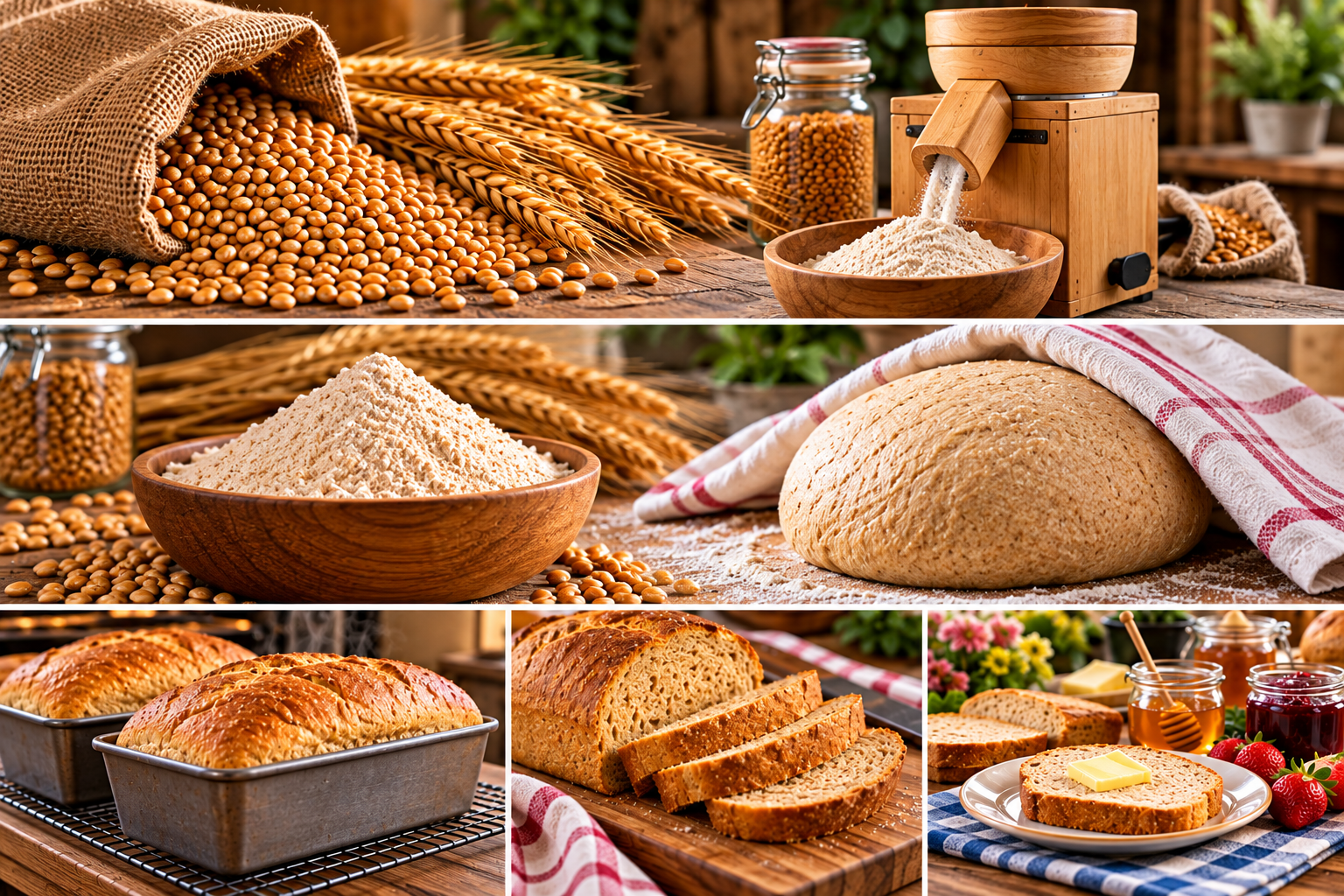
Discover why milling your own wheat and baking homemade bread is a simple step toward healthier, more self-sufficient living.
There is something wonderful about the smell of freshly baked bread filling a home. For generations, bread was a staple of family meals, often made from grain milled locally or ground at home.
But the flour used in much of today’s bread is different from the flour our ancestors used. During the late 1800s and early 1900s, changes in commercial milling transformed how flour was produced, stored, and distributed.
These changes made bread more convenient and affordable, but they also removed valuable nutrients from the wheat.
Today, more families are rediscovering the benefits of milling whole grains at home. Not only does freshly milled flour produce delicious bread, but it also allows us to use the entire wheat kernel, just as nature provides it.
What Happened to Our Flour in the Early 1900s?
Before industrial milling became widespread, many families obtained flour from local mills or ground their own grain. Whole-grain flour contained all three parts of the wheat kernel.
That began changing dramatically with the introduction of steel roller mills in the late 19th century.
These machines made it possible to separate wheat into its individual components, removing the bran and germ and leaving mostly the starchy endosperm.
The result was the fine, white flour that became increasingly popular during the early 1900s.
Why was this considered such an improvement?
Shelf life.
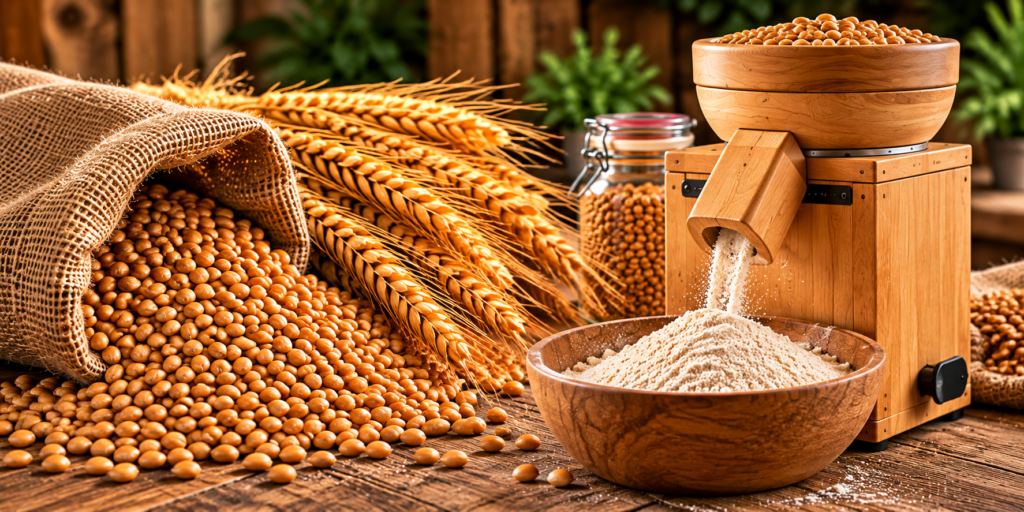
The germ of the wheat kernel contains natural oils. Once wheat is ground, these oils are exposed to air and can eventually become rancid.
By removing the germ and bran, flour manufacturers could produce a product that lasted longer, traveled farther, and could be stored in warehouses and grocery stores without spoiling as quickly.
White flour also produced lighter, softer bread that appealed to consumers.
Unfortunately, the milling process removed much of the grain’s natural fiber, vitamins, minerals, and beneficial plant compounds.
The Three Parts of a Wheat Kernel
To understand the difference between white flour and freshly milled whole wheat, it helps to know what is inside a grain of wheat.
1. Bran — The Protective Outer Layer
The bran contains much of the wheat kernel’s dietary fiber, along with minerals and beneficial plant compounds.
Fiber supports healthy digestion, contributes to fullness, and can help maintain healthy cholesterol levels.
2. Germ — The Nutrient-Rich Heart
The germ is the part of the kernel that can grow into a new wheat plant.
It contains vitamin E, B vitamins, healthy fats, and other nutrients.
The germ’s natural oils are also one reason whole-grain flour has a shorter shelf life than refined white flour.
3. Endosperm — The Energy Source
The endosperm makes up most of the wheat kernel.
It consists primarily of starch and protein, including the proteins that form gluten.
When commercial mills remove the bran and germ, the remaining endosperm becomes refined white flour.
Although white flour still provides calories and some protein, it contains much less natural fiber and lower amounts of several nutrients than whole wheat.
Why Did Manufacturers Start Enriching Flour?
As refined flour became a common part of American diets, nutrition researchers and public health officials became concerned about the loss of important vitamins.
During the early 1940s, manufacturers began enriching white flour by adding certain nutrients back into the product.
Today, enriched flour commonly contains added iron and B vitamins, including thiamin, riboflavin, niacin, and folic acid.
This enrichment has helped prevent nutritional deficiencies and provides genuine public health benefits.
However, enrichment does not restore everything removed during refining. Much of the fiber, vitamin E, and other naturally occurring compounds are not replaced.
This is one reason nutrition experts continue to recommend choosing whole grains regularly.
What Sue Becker Teaches About Freshly Milled Flour
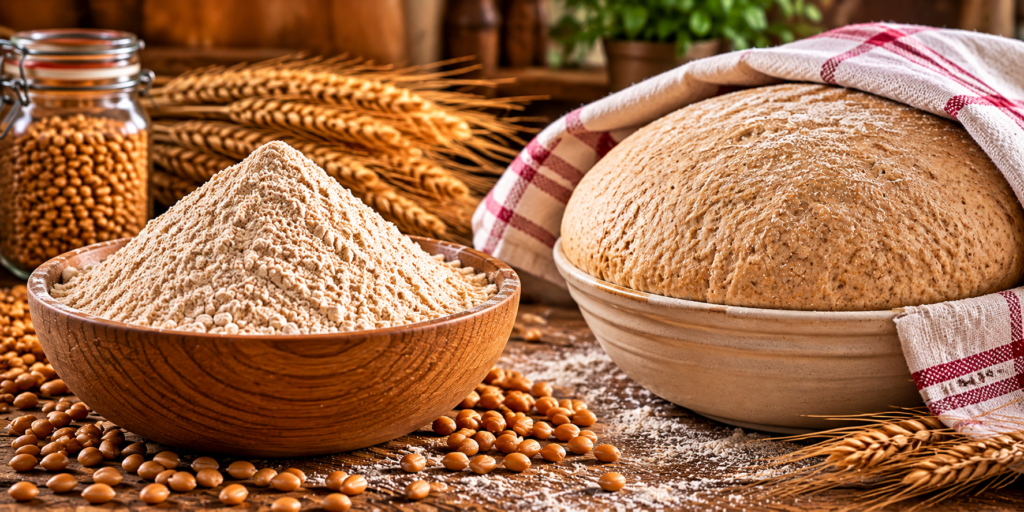
Sue Becker, founder of Bread Beckers, has spent decades encouraging families to return to baking with freshly milled whole grains.
Her message focuses on the nutritional value of the entire wheat kernel and the importance of preparing real food at home.
She explains how commercial milling changed bread from a food containing the complete grain into a more refined product designed for longer storage.
Her teachings have encouraged many families to purchase grain mills, store whole wheat berries, and make their own bread.
One important distinction is that while whole-grain flour is nutritionally different from refined flour, research does not establish that freshly milling wheat immediately before baking cures diseases or is always dramatically more nutritious than properly stored commercial whole-wheat flour.
The strongest established benefit comes from eating the whole grain rather than removing its bran and germ.
Fresh milling also offers advantages in flavor, control over ingredients, and potentially preserving freshness-sensitive nutrients.
Seven Benefits of Milling Your Own Wheat and Baking Bread
1. You Keep the Entire Wheat Kernel
When you mill whole wheat berries and use all the resulting flour, you retain the bran, germ, and endosperm.
Nothing needs to be removed.
This means your bread naturally contains dietary fiber, minerals, vitamins, and other compounds found in whole wheat.
2. Fresh Flour Has Wonderful Flavor
Freshly milled flour has a distinctive aroma that can be nutty, slightly sweet, and earthy.
Different varieties of wheat create different flavors.
Hard white wheat generally produces a milder bread, while hard red wheat has a stronger, traditional whole-wheat flavor.
3. You Control the Ingredients
Homemade bread can be made with just a few ingredients: flour, water, yeast, salt, and a little oil or sweetener if desired.
You decide what goes into your family’s bread.
There is no need to add commercial preservatives simply to make bread last for weeks on a grocery store shelf.
4. Whole Grains Support Digestive Health
Whole wheat contains dietary fiber, which helps maintain regular bowel movements and supports beneficial intestinal bacteria.
Diets rich in whole grains are also associated with a lower risk of certain chronic diseases, including cardiovascular disease and type 2 diabetes.
5. Wheat Berries Are Excellent Pantry Staples
For anyone interested in preparedness or self-sufficient living, storing whole wheat berries can be a practical investment.
Properly dried wheat berries can remain usable for years when protected from moisture, insects, oxygen, and excessive heat.
Unlike flour, intact grain protects its natural oils from exposure to air.
A supply of wheat berries and a grain mill gives you the ability to make flour whenever you need it.
For emergency preparedness, a manual grain mill is especially useful because it can operate without electricity.
6. Baking at Home Can Save Money
Buying wheat berries in bulk and baking several loaves at a time may reduce the cost of homemade bread compared with some premium artisan breads.
The savings depend on grain prices, electricity, equipment costs, and how frequently you bake.
7. Breadmaking Is a Valuable Self-Reliance Skill
Knowing how to turn stored grain into bread is a practical skill that can be passed from one generation to another.
It also encourages families to become more involved in producing their own food rather than relying entirely on packaged products.
For a homestead or preparedness-minded household, that knowledge is valuable.
Basic Freshly Milled Whole Wheat Bread Recipe
This beginner-friendly recipe makes one standard loaf of homemade whole wheat bread.
Preparation: Approximately 25 minutes, plus rising time
Total time: Approximately 2½–3 hours
Yield: 1 loaf
Ingredients
- 3 to 3½ cups freshly milled hard white wheat flour (approximately 360–420 grams)
- 1¼ cups warm water (approximately 105–110°F)
- 2¼ teaspoons instant yeast (1 packet)
- 2 tablespoons honey
- 2 tablespoons olive oil or melted butter
- 1¼ teaspoons salt
Instructions
Step 1: Mill Your Wheat
Mill approximately 2½ cups of hard white wheat berries, then measure or weigh the flour needed for the recipe. The exact yield depends on the wheat and mill.
Use the flour soon after milling for the freshest flavor.
Step 2: Mix the Ingredients
In a large mixing bowl, combine the warm water, honey, yeast, oil, and salt.
Add 3 cups of freshly milled flour and mix until a soft dough forms.
Let the dough rest for 15–20 minutes so the flour can absorb the water.
Step 3: Knead the Dough
Knead by hand for approximately 10–15 minutes, or use a stand mixer with a dough hook for about 6–10 minutes.
Add a little more flour only if necessary.
Freshly milled whole wheat dough should remain soft and slightly tacky. Adding too much flour can make the finished bread dry and heavy.
Step 4: First Rise
Place the dough in a lightly greased bowl.
Cover with a clean towel and allow it to rise in a warm location for approximately 60–90 minutes, or until noticeably doubled.
Step 5: Shape the Loaf
Gently press down the dough and shape it into a loaf.
Place it in a greased 9 × 5-inch loaf pan.
Step 6: Second Rise
Cover loosely and let the dough rise for another 30–60 minutes, until it crowns approximately 1 inch above the pan.
Step 7: Bake
Preheat the oven to 350°F.
Bake for approximately 35–40 minutes, until the bread is golden brown and the center reaches about 190–200°F.
Step 8: Cool and Enjoy
Remove the bread from the pan and cool on a wire rack.
For cleaner slices, allow the loaf to cool before cutting.
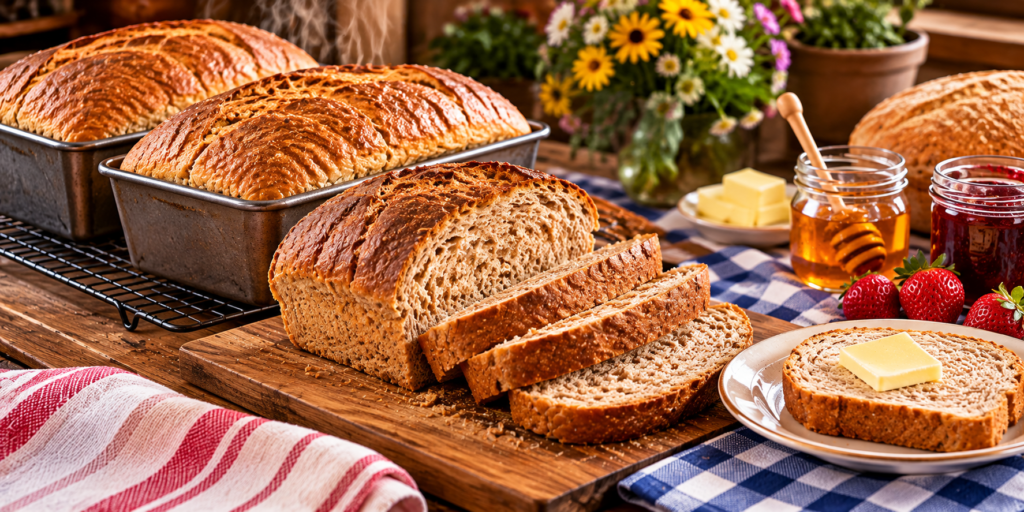
Enjoy with butter, honey, homemade jam, or alongside a hearty soup.
Tips for Better Freshly Milled Bread
Choose the right wheat. Hard white wheat is a good choice for beginners because its flavor is mild and it contains enough protein for yeast bread.
Avoid adding too much flour. Whole wheat absorbs moisture gradually, so give the dough time to hydrate.
Expect a different texture. Whole-grain bread may be slightly denser than commercial white bread because the bran affects gluten development.
Store your bread properly. Homemade bread without preservatives usually has a shorter room-temperature shelf life. Freeze extra slices or loaves to keep them fresh longer.
Store flour carefully. If you mill more flour than you need, refrigerate or freeze the extra in an airtight container to slow deterioration.
Bringing an Old-Fashioned Skill Back Into the Kitchen
Milling wheat and baking bread at home may seem like a return to the past, but it fits beautifully into modern self-sufficient living.
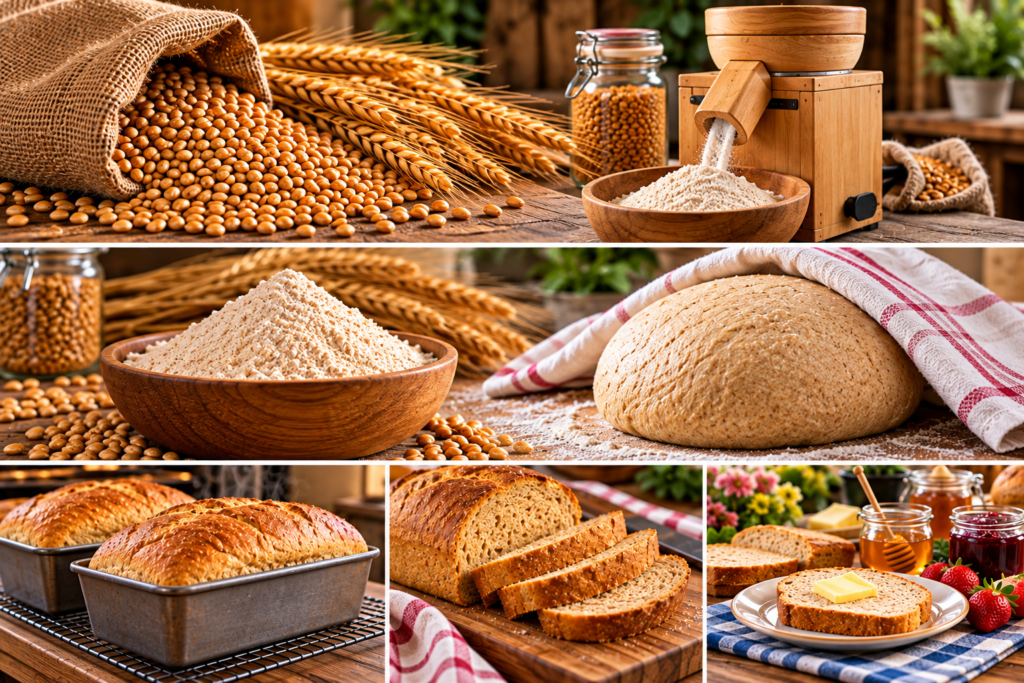
A small electric grain mill can turn wheat berries into fresh flour in minutes. A manual mill provides another option for families who want to prepare food without depending entirely on electricity.
And there is something satisfying about knowing exactly where your bread comes from.
You don’t need a farm, a large kitchen, or years of baking experience to begin.
Start with a small supply of wheat berries, a dependable grain mill, and a simple bread recipe.
As you gain experience, you can explore rolls, tortillas, muffins, pancakes, pizza crusts, and other foods made with freshly milled grains.
Freshly milled bread is more than a delicious homemade food. It’s an opportunity to enjoy whole grains, build useful skills, and take another step toward a more self-reliant lifestyle.
Important: Wheat contains gluten. Fresh milling does not make wheat safe for people with celiac disease or wheat allergy. In spite of this, though, many people who considered themselves to be gluten intolerant, have found that eating freshly milled grains is indeed tolerated and of benefit.